Silver Trout
All week the skies have remained gray. They match the landscape as well as my mood. Outside the window, juncos flit among cedar trees like the first snowflakes of winter. White-throated sparrows shuffle over the lawn, searching for seeds scattered by chickadees and titmice congregating around a feeder hanging from a metal post. Even with the window closed I can hear their chirps as they complain about the damp weather. The bird song lures me away from the warmth of the woodstove, and after gathering my fishing gear, I find myself making the short drive to Bonnie Brook.
I roll down my window upon approaching the narrow bridge that spans the meager current. Looking down, I can see that the water is low. Not a good sign with winter nearly upon us. A doe and her yearlings graze in a meadow beside the bridge. They look up. The two young deer sidle closer to their mother when I pull the vehicle off the road.
The pin oaks and beech trees still cling to their withered leaves, but those of the maples and silver birch, hickory and ironwood crunch under my wading boots as I find the narrow path leading into the forest. I rarely caught fish the first few years tramping along the banks of this tiny stream. It took more than a season to meet my first brook trout, and although the rainbows made my acquaintance soon thereafter, it wasn’t until another few years before the first brown trout introduced itself.
This afternoon the stream is dark, cold. It does not beckon. I had hoped for a mid afternoon midge hatch, maybe a few blue-winged olives or perhaps some late-season stoneflies, but the caddis larvae lie snug within their stick houses while mayfly and stonefly nymphs have burrowed deep into the bed of the stream. Without a hatch the trout remain lethargic, unwilling to come out and play. Even so, what is fishing if not an exercise in hope.
I tie a soft-hackled Hare’s Ear pattern to the end of my leader and knot a short length of tippet to the bend of the wet fly’s hook. Hoping to improve my chances, I add a tiny pheasant-tail nymph to the rig. After a short cast, the two flies sink from sight, tumbling soundlessly around a boulder whose shoulder protrudes through the stream’s surface. The trout take no interest in either pattern and I fail to find any sign of feeding fish.
Working through a set of riffles, I pull back, but feel only the lifeless tug of a submerged leaf. Forty minutes later I remain chilled despite a flannel shirt and wool vest. Joints creak, muscles burn.
The wooly adelgid is attacking the hemlocks that shelter the upper and lower reaches of this stream. If not brought under control, the exotic pest will be the demise of these stately trees. As the hemlocks go, so do the trout. For its the shade cast by this forest that keeps the temperature of the stream cool enough to sustain the population of wild fish inhabiting its waters.
Pools that should be two- or three-feet deep measure no more than a few inches. Runs that were once productive are now too shallow to hold fish. Over the last few summers Bonnie Brook has seen less rain than in past years, followed inevitably by excessive flooding. Whatever the cause, these are conditions with which wild trout must contend. In past years, I’ve found that for every pool damaged, another was improved, and in some cases, new runs created. This autumn the rain did not fall.
I’ve come to know this little stream as well as the twelve acres on which Trish and I built our home. When I first discovered the brook, barberries and brambles, wild grape and rose bushes grew along the middle stretch of its banks. The roots of this untamed tangle of branches, vines, and thorns held the sides of the stream in place. The bushes discouraged erosion, and yes, made casting a fly difficult. Over the last few years, flooding has scoured the banks. With the removal of the bushes, in many places the sides of the stream have collapsed, further lessening the ability of the brook to hold water deep enough to sustain trout.
Although the stream’s riffles have always been shallow, they provided aeration for the slightly deeper runs where finger-size brook trout have been known to seize a wet fly. If a dry fly was cast with skill, a chunky rainbow might have splashed through the surface. Then there were the occasional waist-deep pools, dark enough for the resident brown trout to spend the daylight hours brooding over their future.
I follow the stream’s course through a ravine. The tops of a number of hemlocks have split from their trunks, creating a hodgepodge of timber scattered across the forest floor reminding me of a game of pick-up sticks. Rhododendron, and to a lesser extent, mountain laurel spread down the sides of the gorge. Around a bend, the tenuous current twists through a narrow flume. It falls from a height of more than ten feet into what had once been the stream’s deepest pool. Looking down, I’m surprised to find the run below the falls is less than half its normal size.
Although sometimes difficult, I’ve learned to accept change when caused by the natural course of events, but descending into the ravine, I discover a log that had once held back the waters of the pool has been intentionally removed. Looking closer, I find marks where a chainsaw has scarred the old tree’s trunk. Instead of bringing the hemlock-killing insects under control, rather than moving beyond political bickering over our extreme weather, we are busy cutting away the trunks of trees that create deeper pools for fish to survive in times of drought.
A few flakes of wet snow drip down from the ashen sky. Memories like wisps of fog slip over the pool’s surface. They can be found behind every boulder and around each bend if you know where to look.
Although wild places have a way of jealously guarding their secrets, I have listened carefully whenever the little brook has whispered in my ear. Of all its lessons learned, perhaps the most important is the fragility of the fish struggling to survive between its banks. It would be easy to remain in the past, but I fear for these trout of Bonnie Brook. The damage sustained by the stream brings to mind Harry Plunket Greene’s evocative Where The Bright Waters Meet.
Like the trout of the English author’s River Bourne, I worry that the wild fish of my little stream will succumb to events beyond their control. In his book, Greene describes how his “silver trout” thrived during the first few years of the twentieth century until they were unwittingly crippled by the introduction of hatchery fish, soon thereafter to vanish altogether, as the result of runoff from the tar and salt “needed” to maintain the local roads beside the chalk stream.
Now, I’m an angler, at my best when wading through running water. There will always be drought and flood. The life of a trout will never be an easy one. I’m all for reducing fluorocarbons and fighting the infestation of an imported insect if it might give these audacious fish a fighting chance. What a shame, if for lack of trying my little stream should suffer the same fate as Harry Plunket Greene’s beloved Bourne.
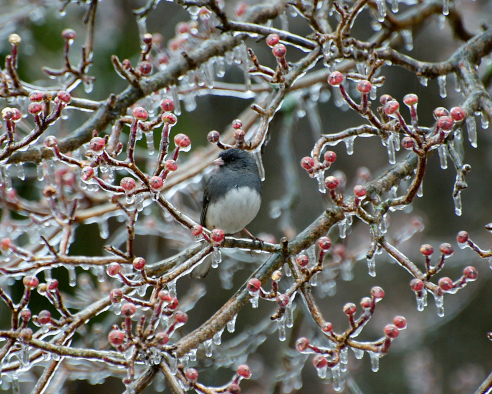
The snow continues to fall as I trudge back up the trail. It turns to ice by the time I reach the truck. Across the field, the branches of a hemlock appear to shimmer like so many silver trout captured for one last moment before passing into time.
 Slate Run Sportsmen
What a wonderful read. I wish I had your writing skills. God has given you his bleessings.
LikeLike
I realize I’m replying to your comment waaay late but … Just to make sure you know – the “Against The Current” articles are written by Bob Romano and NOT by me (UB). Our Walt Franklin and Mr. Romano have much more skill than I do for certain. UB
LikeLike
Thank you Mr. Romano for another great submission. Hope you and your family have a great Thanksgiving. UB
LikeLike